


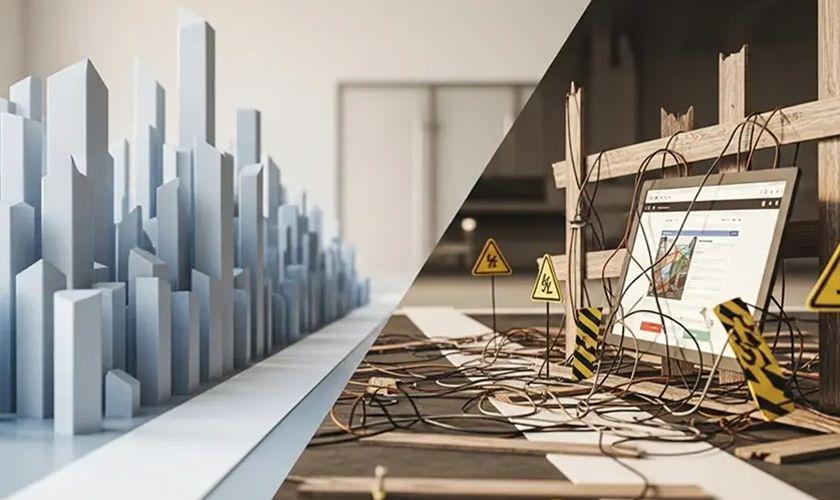
Over the past decade, businesses across Kerala have rapidly embraced digital platforms. From traditional family-run enterprises to funded startups and export-focused SMEs, having a professional website is no longer optional. Yet, despite this urgency, many organisations end up disappointed after hiring web developers in Kerala.
The issue is not a lack of talent. Kerala has a strong pool of developers, agencies, and freelancers. The real problem lies in how hiring decisions are made. Too often, businesses focus on surface-level factors like cost, visual appeal, or personal referrals, without fully understanding how website development impacts long-term growth, performance, and scalability. The result is a website that looks acceptable at launch but quietly limits the business over time.
This article breaks down the most common hiring mistakes Kerala businesses make, why these errors keep repeating, and how decision-makers can evaluate developers more effectively without turning the process into a technical maze.
Kerala’s digital services ecosystem has evolved faster than its buyer maturity. Many founders and marketing heads are hiring website developers for the first time or replacing outdated sites built years ago. This creates a gap between expectations and reality.
Local market dynamics also play a role. Price competition among agencies and freelancers is intense. Many developers position themselves as full-service providers without clearly defining their project scope or long-term responsibilities. At the same time, businesses often underestimate website development, treating it as a one-time creative task rather than an ongoing digital asset.
Cultural factors matter too. Trust-based hiring through friends, relatives, or informal references is common. While this works in some industries, website development requires structured evaluation, documentation, and accountability. Without these, even skilled developers can deliver poor outcomes.
One of the most frequent mistakes businesses make is selecting web developers purely because they offer the lowest quote. This usually happens when website development is seen as an expense rather than an investment.
Low pricing often means shortcuts. Developers may reuse generic templates without proper customisation, skip performance optimisation, or ignore SEO-ready architecture. In many cases, maintenance and scalability are not even considered during development.
The long-term impact becomes visible within months. The website loads slowly, struggles with traffic spikes, fails to rank on search engines, or breaks when new features are added. Businesses then spend more money fixing or rebuilding what was initially “affordable,” turning a cost-saving decision into an expensive mistake.
Another critical error is starting development without clearly defining what the website needs to achieve. Many businesses tell developers they want a “modern website” or a “professional redesign” without aligning it to specific business goals.
This happens because decision-makers assume developers will automatically understand their industry, audience, and growth plans. In reality, without a documented project scope, developers make assumptions based on past projects or personal preferences.
The result is misalignment. The website may look visually appealing but fail to support lead generation, integrations, content expansion, or future marketing campaigns. Over time, the business realises the website cannot grow with them, forcing compromises or costly redevelopment.
In Kerala’s market, many agencies position themselves strongly around design. Clean layouts, animations, and visual polish are often showcased in portfolios. While design matters, it is only one part of website development.
This mistake happens when businesses evaluate developers mainly on aesthetics. They overlook backend architecture, code quality, security practices, and performance optimisation. As a result, the website may look impressive but suffer from technical weaknesses beneath the surface.
Long-term consequences include poor Core Web Vitals, difficulty implementing new features, security vulnerabilities, and dependence on the original developer for even minor changes. A website built without strong development foundations becomes fragile as the business scales.
Many businesses assume SEO and performance can be “added later.” This belief leads them to hire developers who focus only on visual delivery, without building an SEO-ready website from the start.
This mistake often occurs due to fragmented decision-making. Development is treated as one phase, and marketing or SEO as another. Developers are not asked about page structure, schema readiness, loading speed, or mobile performance.
The long-term impact is significant. Search engines struggle to understand the site structure. Pages load slowly, increasing bounce rates. Marketing teams later face limitations that cannot be fixed without reworking core development elements. What could have been addressed during development becomes expensive to repair post-launch.
Website development does not end at launch, yet many Kerala businesses hire developers without discussing post-launch maintenance. This happens when websites are viewed as static assets rather than evolving platforms.
Some developers offer no formal maintenance plan. Others disappear after handover, leaving businesses unsure whom to contact for updates, security patches, or bug fixes. In certain cases, access credentials are not properly documented.
Over time, the website becomes outdated, vulnerable to security issues, and incompatible with new browser or platform updates. Businesses then scramble to find another development partner who must first understand and untangle someone else’s work.
Many businesses build websites based only on current needs. They do not consider future requirements such as CRM integration, multilingual content, ecommerce expansion, or third-party digital platforms.
This mistake often happens because developers are not asked about scalability during evaluation. The immediate goal becomes getting the site live quickly, without considering how it will adapt as the business grows.
The long-term impact is structural rigidity. Adding new features becomes complex or impossible without major changes. Businesses outgrow their websites faster than expected, leading to repeated redevelopment cycles that disrupt operations and branding consistency.
Trust-based referrals are common in Kerala’s business culture. While recommendations can be valuable, relying solely on familiarity without proper evaluation is risky.
This mistake occurs when businesses skip due diligence because the developer is a friend, relative, or known contact. Technical capability, process maturity, and accountability are not assessed objectively.
When issues arise, professional boundaries blur. Projects get delayed, responsibilities become unclear, and resolving problems becomes awkward. In the long run, both the business relationship and the website suffer.
Evaluating web developers does not require technical expertise, but it does require structured thinking. Businesses should start by understanding their own goals, growth plans, and internal capabilities.
A credible web development agency or development partner will ask questions about business objectives, audience, scalability, SEO readiness, and maintenance expectations. They will explain their development process clearly, including timelines, responsibilities, and post-launch support.
Instead of focusing only on portfolios, decision-makers should evaluate how developers think. Do they discuss performance optimisation, security, and long-term flexibility? Do they document scope and communicate trade-offs transparently?
For businesses looking to benchmark professional standards and process maturity, reviewing established providers such as Web Development Company in Kerala at can help clarify what structured development engagement looks like, even if the final choice differs.
Hiring web developers in Kerala is not just a technical decision. It is a strategic business choice that affects visibility, operations, and scalability for years.
Most hiring mistakes stem from unclear expectations, price-driven decisions, and underestimating the complexity of modern website development. These errors rarely show immediate damage but gradually limit growth, marketing effectiveness, and digital credibility.
Businesses that approach developer evaluation with clarity, structure, and long-term thinking avoid these pitfalls. They gain websites that support performance, adapt to change, and function as reliable digital platforms rather than ongoing liabilities.
Budgets vary based on complexity, scalability, and integration needs. A realistic budget accounts not only for design and development but also for performance optimisation, SEO readiness, and maintenance.
Freelancers may suit small, limited-scope projects. Agencies are generally better equipped for long-term scalability, structured processes, and ongoing support, especially for growing businesses.
By assessing how developers explain their process, handle project scope, discuss performance and SEO, and document responsibilities. Clear communication often reflects technical maturity.
SEO should be integrated at the development stage itself. Site structure, loading speed, and technical foundations directly affect long-term search visibility.
Vague timelines, lack of documentation, resistance to discussing maintenance or scalability, and poor communication are common warning signs.
A well-built website should evolve continuously with updates and enhancements. Full rebuilds should be infrequent if scalability and maintenance were planned correctly from the start.