
Blog Post

From Offline to Fully Digital: How a Kerala Service Brand Doubled Revenue in 9 Months

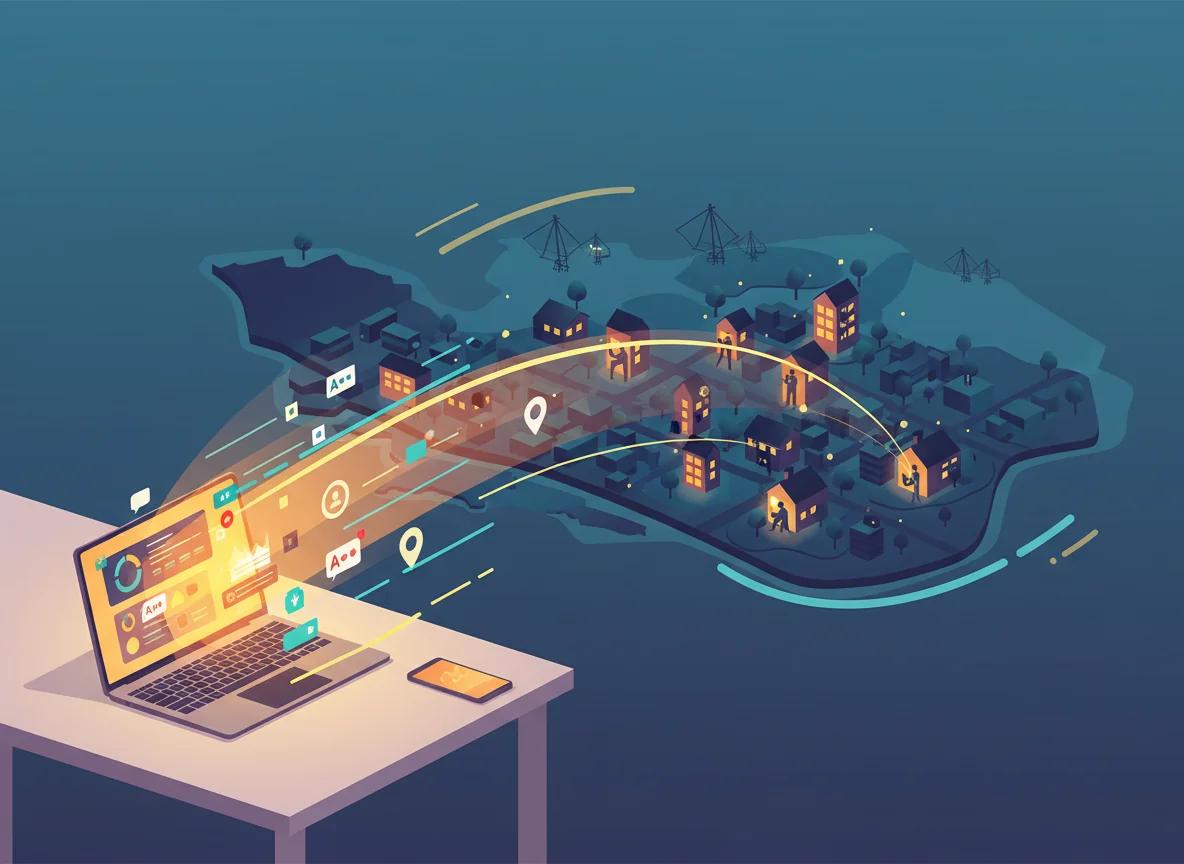
Illustrated scene of a digital marketer in a Kochi office viewing location-targeted ad performance on a screen, with glowing digital lines connecting their dashboard to nearby neighborhoods in the city outside the window.
  • Share:

In January 2023, a mid-sized Kerala home-services brand (let’s call them “GreenNest Services”) had no website, no CRM, and marketing that depended on walk-ins, WhatsApp forwards, and local classifieds. Nine months later, they had doubled revenue, cut lead costs by 41%, and were booking customers from across Kerala and even NRIs abroad without opening a single new branch.

This is not a unicorn story. It’s a disciplined digital rollout. Riolabz, a web development and digital marketing agency operating from Kochi and serving India, the UK, and the USA, led a phased transformation: a high-performance website, SEO-first architecture, and tightly measured paid campaigns.

This case story shows the exact steps, numbers, and decisions: how web development for business growth was planned, how digital marketing & SEO that converts was executed, and how a traditional Kerala brand became a data-driven operation in under a year.

Key takeaway: The fastest path from offline chaos to predictable revenue is a phased, measurable digital rollout—not a single “big bang” campaign.

1. Where They Started: An Offline Brand Stuck at a Ceiling

GreenNest Services is a regional home-maintenance provider with three branches in central Kerala. Before going digital, their growth had stalled around ₹4.5–₹5 lakh monthly revenue. The limiting factor wasn’t demand; it was discoverability and operations.

Here’s what their pre-digital reality looked like:

  • Lead sources: Walk-ins, word-of-mouth, local newspaper classifieds, and a handful of Justdial-type listings.
  • Tracking: No CRM; customer details lived in notebooks and staff phones.
  • Marketing spend: ~₹40,000/month on print and local directories, with no clear ROI.
  • Operational pain: Missed follow-ups, double bookings, and no central view of demand by area.

They believed “our customers are local, so we don’t really need a website.” That assumption was already being disproved by their own data: when customers cancelled, staff heard lines like, “We found someone else on Google, they had good reviews,” or “Your competitor’s website looked more professional.”

Riolabz started with a simple diagnosis:

  1. They were invisible for high-intent Google searches.
  2. They had no owned digital asset—no website, no analytics.
  3. They couldn’t scale offline word-of-mouth beyond a narrow radius.
Quotable insight: If customers search online and don’t find you, they still buy—just from someone else.

2. Phase 1 – Building the Growth Engine: Web Development for Business Growth

Riolabz’s first move was not launching ads; it was building an SEO-ready, conversion-focused website that could function as a “24/7 digital branch.” Web development for business growth, in this context, meant engineering for performance, structure, and lead capture not just aesthetics.

The core web strategy had five pillars:

  • Speed and stability: A lightweight, mobile-first tech stack, optimized hosting, and caching. Target: <2 seconds load time on 4G, >90 Google PageSpeed score on mobile.
  • Clear information architecture: Separate service pages (e.g., plumbing, electrical, deep cleaning) instead of a single generic “Services” page. This allowed targeting dozens of long-tail queries.
  • Local SEO foundations: Schema markup (LocalBusiness, Service), embedded Google Maps, NAP (Name, Address, Phone) consistency, and location-specific landing pages for Kochi, Thrissur, and Kottayam.
  • Conversion design: Prominent click-to-call buttons, WhatsApp chat, and short, frictionless enquiry forms with service-type dropdowns.
  • Analytics-first setup: Google Analytics 4, Google Tag Manager, and call tracking events from day one.

Time-to-launch for the MVP website: 6 weeks.

Within the first month after launch (with minimal promotion):

  • Organic and direct traffic reached ~1,200 sessions/month.
  • Form + call enquiries averaged 3–5 per day from the website alone.
  • Lead-to-customer conversion hovered at 27% (tracked manually but consistently).
Key takeaway: A fast, structured website is not a branding asset; it’s the core infrastructure every future marketing rupee will depend on.

3. Phase 2 – Digital Marketing Services in Kochi: Capturing Local Demand Fast

With the website live, GreenNest needed customers now, not just rankings later. Riolabz deployed a tightly scoped mix of search ads and social campaigns classic digital marketing services in Kochi, but with ruthless focus on measurable outcomes.

The approach:

  1. Google Search Ads: Targeted high-intent queries like “home cleaning service kochi,” “electrician near me,” and branded competitor terms. Geo-targeting was restricted to a 25–30 km radius of each branch.
  2. Meta (Facebook/Instagram) Lead Ads: Visual campaigns focused on before/after cleaning images, limited-time offers, and festival-season packages (Onam, Vishu, Christmas).
  3. Landing pages by intent: Paid traffic never went to the homepage. Each service segment had a dedicated, stripped-down landing page with testimonials, FAQs, and a single primary CTA.

First 90 days of performance:

  • Ad spend: ~₹75,000/month (60% Google, 40% Meta).
  • Average cost per lead (CPL): ₹185 on search, ₹142 on Meta.
  • Lead volume: ~350–420 qualified leads/month from paid alone.
  • Revenue impact: Monthly revenue grew from ~₹4.8 lakh to ₹7.2 lakh by end of month 3—~50% uplift.

Two things made this work quickly:

  • Rapid A/B testing: Ad copy, call-out extensions, and form lengths were tested weekly.
  • Operations alignment: Riolabz helped GreenNest design a simple lead-handling SOP: respond within 10 minutes, log outcome, and tag leads by source.
Quotable insight: Ads don’t generate revenue; systems do. A slow response time can destroy even perfectly targeted campaigns.

4. Phase 3 – Digital Marketing & SEO That Converts: Turning Visibility into Bookings

While paid traffic built momentum, Riolabz invested in digital marketing & SEO that converts—the kind of organic presence that continuously feeds the top of the funnel and improves paid efficiency.

The SEO strategy was anchored in three questions:

  • What do high-intent customers in Kerala actually search for?
  • How can we answer those queries better than any competitor page?
  • How do we ensure that organic visitors can become leads in 1–2 clicks?

Key initiatives over 6 months:

  1. Search-optimized service clusters: Each service page was expanded to ~800–1,000 words with pricing ranges, process explanations, and Kerala-specific use cases (monsoon cleaning, rental move-in cleans).
  2. Informational blog content: Articles like “How To Choose a Home Cleaning Service in Kochi,” “Monsoon Home Maintenance Checklist for Kerala Homes,” and “Deep Cleaning vs Regular Cleaning: What’s Right for You?” captured early-stage intent.
  3. Local SEO for ‘SEO services Kerala’ style terms (meta-strategy): Riolabz used similar frameworks on its own site to rank for terms like “digital marketing services kochi” and “SEO services Kerala,” attracting clients like GreenNest in the first place.
  4. Review and reputation engine: Post-service SMS and WhatsApp nudges asked customers to rate on Google and share photos. Review snippets were then embedded as social proof on high-traffic pages.

Results at month 9:

  • Organic traffic: From near zero to ~7,800 sessions/month.
  • Organic leads: ~220–260 leads/month, with a CPL effectively under ₹50.
  • Blended CPL (organic + paid): Down from ₹170+ in early months to ~₹100.
  • Revenue: Stabilized around ₹10–₹10.5 lakh/month—more than 2× baseline.
Key takeaway: SEO that converts is not traffic for its own sake; it’s content and architecture engineered to turn searchers into scheduled jobs.

5. What Changed Inside the Business: Systems, Not Just Screens

The most underrated part of this transformation was internal. A website and campaigns are front-end changes; revenue doubling demanded back-end discipline.

Riolabz worked with GreenNest to adopt simple but powerful operational shifts:

  • Central lead repository: All leads website, calls, WhatsApp, ads were logged into a lightweight CRM. Source, service type, and status were mandatory fields.
  • Service capacity mapping: For the first time, they could see demand by area and time slot, leading to smarter staffing and routing.
  • Monthly performance reviews: Instead of “How was business?”, leadership now asked, “What is our lead-to-job conversion by channel, and how did that change month-on-month?”
  • Offer and pricing tests: They tested weekday discounts, bundle packages, and subscription cleans, informed by real data on which offers drove higher lifetime value.

Impact of these internal upgrades over the 9-month period:

  • Lead-to-customer conversion increased from ~27% to ~39%.
  • Average ticket size rose by ~18% thanks to better cross-sell (e.g., combining pest control with deep cleaning).
  • No-show and cancellation rates fell after automated reminders and confirmations were introduced.

In effect, Riolabz wasn’t just selling digital marketing; they were enabling a different operating model—a data-driven service company rather than a branch-bound local business.

Quotable insight: Digital growth is 50% traffic and 50% the way your organization handles that traffic.

6. Why Riolabz’s Approach Beat Generic Agencies

Many digital marketing agencies promise “more traffic” or “viral campaigns.” Riolabz’s edge in this Kerala case was different: local context, engineering rigor, and full-funnel accountability.

Three differentiators stood out:

  1. Local-first strategy: Messaging and content referenced familiar realities—monsoon damage, rental deposits, NRI-owned apartments rather than generic “global” stock scenarios. Ads and landing pages used Malayalam selectively for trust, English for clarity in pricing.
  2. Performance-obsessed web development: As a company rooted in web and mobile development, Riolabz treated the site as a piece of software to be optimized not a one-off design artifact. They monitored Core Web Vitals, uptime, and funnel drop-offs like a product team.
  3. End-to-end measurement: Every phase from impression to booked job was tracked. Rather than arguing about “brand awareness,” decisions were made on cost per qualified lead, conversion rate by channel, and lifetime value.

This engineering mindset is the same foundation behind Riolabz’s work for clients in the UK and USA, where scalability and maintainability are non-negotiable. Applying that rigor to an SME in Kerala created an “unfair advantage” against local competitors who saw web development as a static expense.

Key takeaway: The agency that owns both your code and your conversions can optimize what really matters: profitable growth, not vanity metrics.

7. A Playbook Kerala Businesses Can Reuse (and Adapt)

Any service business in Kerala healthcare clinics, training institutes, logistics providers, or legal firms can adapt this playbook. The steps are consistent; only the messaging, offers, and channels vary.

A practical roadmap you can follow with Riolabz or another capable partner:

  1. Audit your current baseline: Monthly revenue, lead sources, conversion rates, and capacity. Document, don’t guess.
  2. Build (or rebuild) your website for growth: Fast, mobile-optimized, with clear service pages, local SEO structure, and conversion elements (forms, click-to-call, WhatsApp).
  3. Launch focused paid campaigns: Start with search ads for your highest-margin services and a few well-crafted Meta campaigns. Track CPL and ROAS from week one.
  4. Invest in SEO and content: Target query patterns like “[service] in [city]”, “[service] cost in Kerala”, and “best [service] near me.” Answer them exhaustively on your site.
  5. Fix internal systems: Introduce basic CRM, lead tags, response-time SLAs, and monthly reviews.

In an environment where many businesses still rely on word-of-mouth and static brochures, the combination of web development for business growth and digital marketing services in Kochi is a genuine competitive weapon.

Quotable insight: In 2026, your main competitor may not have a bigger branch but they will almost certainly have a better funnel.

Frequently Asked Questions

What are digital marketing services in Kochi that actually drive revenue?

Revenue-driving digital marketing services in Kochi typically combine four elements: 1) high-intent Google Search Ads targeting “[service] in Kochi” type queries, 2) conversion-focused landing pages with clear CTAs, 3) ongoing SEO to rank for local and service-specific keywords, and 4) remarketing via Meta or Google Display to bring back visitors who didn’t convert. For service businesses, adding call tracking and WhatsApp integration significantly improves lead capture. The key is not to treat these as separate activities but as one integrated funnel—from ad impression to booked job—with common tracking and shared KPIs.

How do I use web development for business growth, not just an online brochure?

Web development for business growth means designing your site around measurable outcomes: leads, sales, and repeat engagement. Start by mapping your core services and creating separate, detailed pages for each. Add clear CTAs (call, WhatsApp, enquiry forms) above the fold. Ensure fast loading (under 2 seconds on mobile), mobile responsiveness, and SEO-friendly structure. Integrate analytics, call tracking, and form conversion events from day one. Finally, connect your website to CRM or at least a centralized lead sheet so that every enquiry is tracked from first click to final conversion.

What does “digital marketing & SEO that converts” really mean?

“Digital marketing & SEO that converts” means campaigns and content are judged by leads and revenue, not just impressions or traffic. Practically, this involves: choosing keywords with clear commercial intent, creating landing pages that answer user questions and reduce friction, optimizing page speed and mobile UX, and constantly A/B testing CTAs and forms. It also means aligning marketing with operations—ensuring rapid follow-up on leads and a simple process to track outcomes. When done well, you see rising conversion rates and falling blended cost per lead over time.

How fast can a Kerala service business see results from going digital?

Timelines vary, but a realistic pattern looks like this: within 4–8 weeks of launching a well-built website and search ads, you should see a noticeable increase in qualified leads. By month 3, if your operations can handle the volume, revenue can grow 30–50%. SEO and content typically begin compounding from month 4 onwards, reducing your cost per lead. Doubling revenue in 9–12 months, as in the GreenNest case, is achievable when web development, paid campaigns, and internal systems are aligned and actively optimized.

Why should I choose a Kochi-based agency like Riolabz over a big national player?

A Kochi-based agency like Riolabz combines technical depth with local context. They understand Kerala-specific consumer behavior, seasonal patterns (Onam, monsoon, school admissions), and language nuances, which makes campaigns more relevant and higher-converting. At the same time, Riolabz brings engineering-grade web and app development expertise gained from clients in the UK and USA—fast, scalable, SEO-ready platforms instead of template sites. This blend of local insight and global standards is often more effective for Kerala businesses than generic, one-size-fits-all national campaigns.

Conclusion: Turning Your Offline Strength into a Digital Advantage

GreenNest’s story illustrates a broader truth: Kerala’s service businesses don’t lack demand; they lack structured digital pathways for that demand to find them. By combining performance-focused web development, disciplined digital marketing services in Kochi, and internal process upgrades, a traditional brand doubled its revenue in just nine months without expanding its physical footprint.

Riolabz’s approach engineering-led, locally grounded, and conversion-obsessed offers a replicable model. Whether you’re running a clinic in Kochi, a logistics firm in Thrissur, or a training center in Calicut, the playbook is similar: build the right digital foundation, capture local demand intelligently, and align your operations to handle growth.

If your business is still largely offline, the question is no longer whether to go digital, but how methodically you choose to do it and who you trust to guide that journey.


WhatsApp